
If this was about foreign citizens, the government would have considerable power. But if it’s US citizens — US citizens don’t lose their rights simply because they are in an airplane at 30,000 feet.
— Jonathan Turley, George Washington University law professor
Dan Bongino interviewed Sonya Labosco, a former Air Marshal:
Federal air marshals have begun following ordinary US citizens not suspected of a crime or on any terrorist watch list and collecting extensive information about their movements and behavior under a new domestic surveillance program that is drawing criticism from within the agency.
The previously undisclosed program, called “Quiet Skies,” specifically targets travelers who “are not under investigation by any agency and are not in the Terrorist Screening Data Base,” according to a Transportation Security Administration bulletin in March.
The internal bulletin describes the program’s goal as thwarting threats to commercial aircraft “posed by unknown or partially known terrorists,” and gives the agency broad discretion over which air travelers to focus on and how closely they are tracked.
But some air marshals, in interviews and internal communications shared with the Globe, say the program has them tasked with shadowing travelers who appear to pose no real threat — a businesswoman who happened to have traveled through a Mideast hot spot, in one case; a Southwest Airlines flight attendant, in another; a fellow federal law enforcement officer, in a third.
It is a time-consuming and costly assignment, they say, which saps their ability to do more vital law enforcement work.
TSA officials, in a written statement to the Globe, broadly defended the agency’s efforts to deter potential acts of terror. But the agency declined to discuss whether Quiet Skies has intercepted any threats, or even to confirm that the program exists.
Release of such information “would make passengers less safe,” spokesman James Gregory said in the statement.
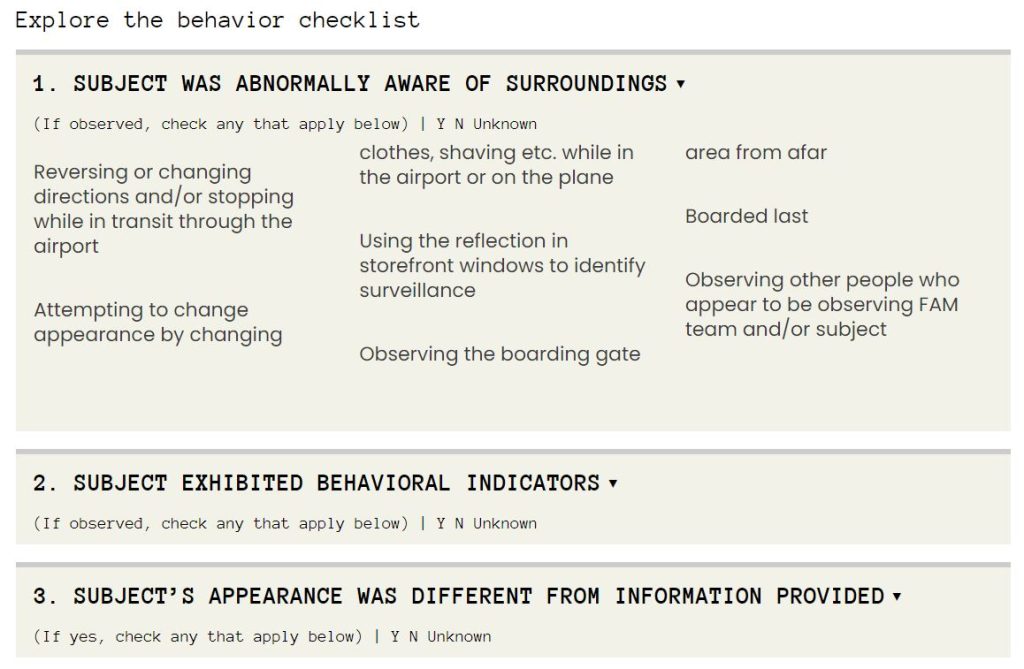
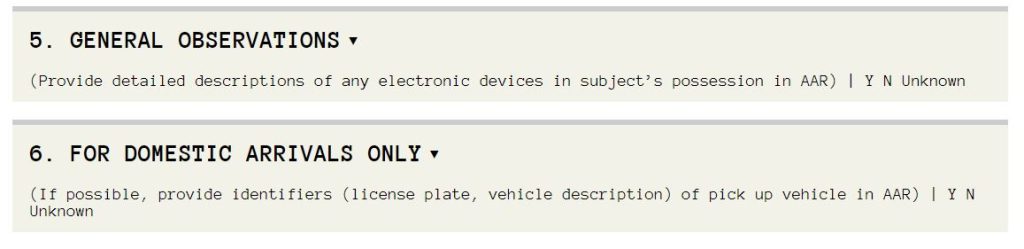
Already under Quiet Skies, thousands of unsuspecting Americans have been subjected to targeted airport and inflight surveillance, carried out by small teams of armed, undercover air marshals, government documents show. The teams document whether passengers fidget, use a computer, have a “jump” in their Adam’s apple or a “cold penetrating stare,” among other behaviors, according to the records.
Air marshals note these observations — minute-by-minute — in two separate reports and send this information back to the TSA.
All US citizens who enter the country are automatically screened for inclusion in Quiet Skies — their travel patterns and affiliations are checked and their names run against a terrorist watch list and other databases, according to agency documents.
The program relies on 15 rules to screen passengers, according to a May agency bulletin, and the criteria appear broad: “rules may target” people whose travel patterns or behaviors match those of known or suspected terrorists, or people “possibly affiliated” with someone on a watch list.
The full list of criteria for Quiet Skies screening was unavailable to the Globe, and is a mystery even to the air marshals who field the surveillance requests the program generates. TSA declined to comment.
When someone on the Quiet Skies list is selected for surveillance, a team of air marshals is placed on the person’s next flight. The team receives a file containing a photo and basic information — such as date and place of birth — about the target, according to agency documents.
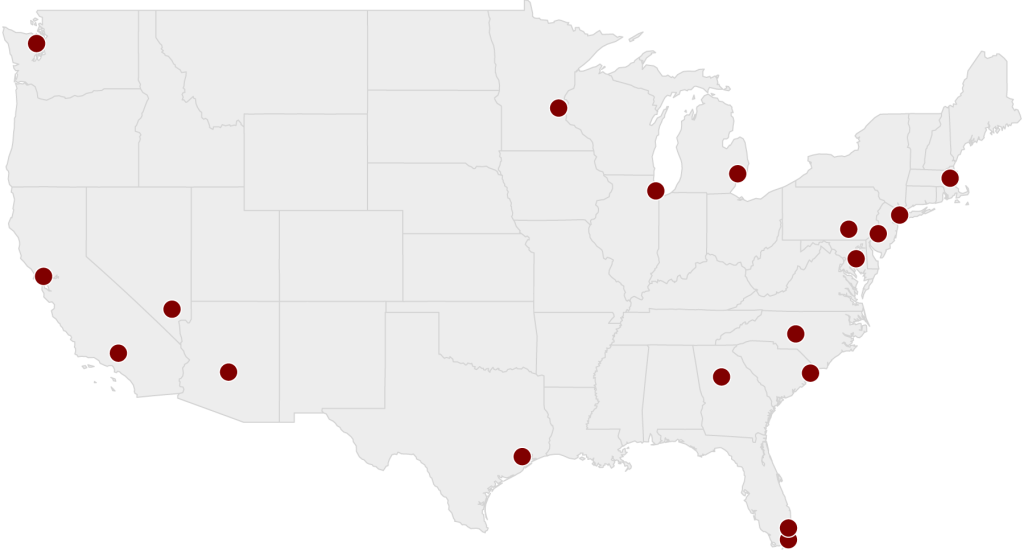
The teams track citizens on domestic flights, to or from dozens of cities big and small — such as Boston and Harrisburg, Pa., Washington, D.C., and Myrtle Beach, S.C. — taking notes on whether travelers use a phone, go to the bathroom, chat with others, or change clothes, according to documents and people within the department.
……Travelers remain on the Quiet Skies watch list “for up to 90 days or three encounters, whichever comes first, after entering the United States,” agency documents show.
Travelers are not notified when they are placed on the watch list or have their activity and behavior monitored.
If they’re targeting a suspected muzzie terrorist, great. Tail that camel jockey all the way to hell and back. The trouble is, they’re not too choosy.
I quit flying after I retired from the Army. Between the incompetent TSA, the gate rapes, the hell that the airlines put people through during the covid hysteria, and the miserable experience that air transport has become, no one in their right mind wants to fly.
Now, Air Marshals are spying for the government.
Related articles:
https://onemileatatime.com/air-marshal-following-passengers/